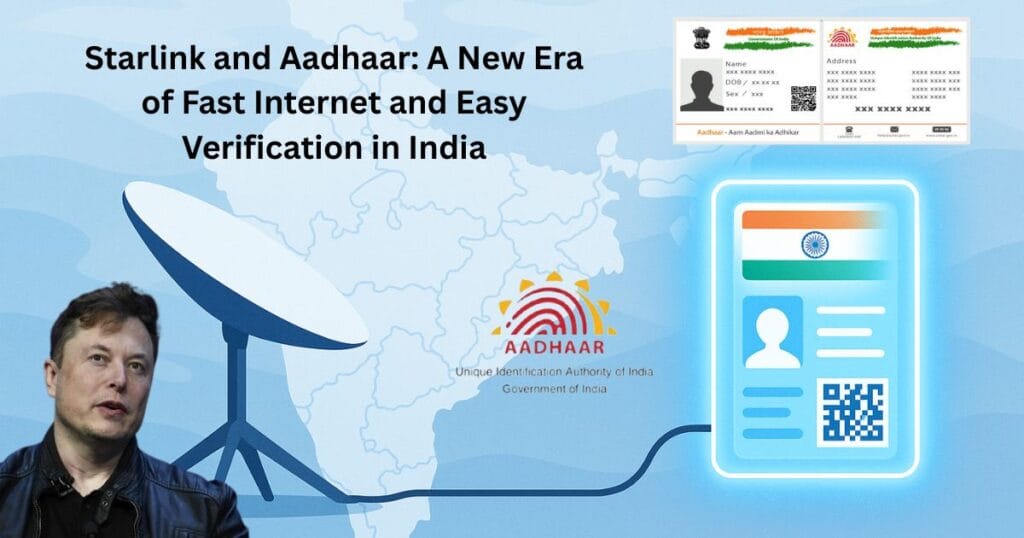
India is on the cusp of a digital revolution, and Starlink, a leading satellite internet provider, is at the forefront with its partnership with the Unique Identification Authority of India (UIDAI). Starlink and Aadhaar collaboration introduces a game-changing system where customers can use their Aadhaar card for quick and secure e-KYC verification to access Starlink’s high-speed internet. Gone are the days of tedious paperwork—everything is now digital, fast, and user-friendly.
This partnership is a boon for rural and remote areas where reliable internet is scarce. By teaming up with telecom giants like Bharti Airtel and Reliance Jio, Starlink aims to expand its reach across India, ensuring better digital connectivity for all. In this article, we’ll break down this partnership in simple terms, explaining how it works, its benefits, and what it means for India’s future.
What is the Goal of Starlink and Aadhaar Partnership?
The Starlink and Aadhaar partnership has clear objectives to transform internet access in India:
- Fast and Easy Verification: Using Aadhaar-based e-KYC, customers can verify their identity in minutes, eliminating lengthy paperwork.
- Internet in Rural Areas: Bringing high-speed satellite internet to villages, hilly regions, and remote areas where traditional broadband is weak or unavailable.
- Digital Inclusion: Bridging the digital divide by ensuring everyone, from rural farmers to urban businesses, can access online services like education, healthcare, and e-commerce.
- Secure Process: The e-KYC process is secure, compliant with Indian regulations, and prioritizes user privacy.
Starlink plans to onboard approximately 20 lakh customers in India, offering speeds up to 200 Mbps. This will benefit not just individuals but also schools, hospitals, and small businesses, driving digital growth across the country.
How Does Aadhaar-Based Verification Work?
The process of signing up for Starlink using Aadhaar e-KYC is simple and efficient. Here’s a step-by-step guide:
1. Aadhaar Number and OTP
- Customers enter their 12-digit Aadhaar number on the Starlink app or website.
- UIDAI sends a One-Time Password (OTP) to the mobile number linked to the Aadhaar card.
- The customer inputs the OTP and consents to share their details for verification.
2. Integration with UIDAI System
- Starlink, as a Sub-Authentication User Agency and Sub-eKYC User Agency, connects to UIDAI’s system via a secure API.
- After receiving the OTP and consent, UIDAI verifies details like name, address, date of birth, or biometric data (e.g., face or fingerprints).
3. Data Privacy
- Starlink only receives the information needed for KYC, such as name and address. Sensitive data, like biometrics, stays secure with UIDAI.
- Data sharing happens only with the customer’s explicit consent, ensuring privacy and compliance with regulations.
4. Verification Completion
- Once UIDAI confirms the details, the KYC process is completed instantly, and the customer is approved for Starlink services.
- The entire process is digital and paperless, requiring no physical documents.
5. Alternative Options
- Aadhaar-based verification is optional. Customers can choose other methods, like PAN card or other government IDs, if they prefer.
Benefit: This process takes just minutes, compared to days for traditional KYC.
How Will Starlink and Aadhaar Transform Rural India?
With nearly 60% of India’s population living in rural areas, access to reliable internet is a major challenge. The Starlink and Aadhaar partnership aims to change that. Here’s how:
1. High-Speed Internet Access
- Starlink’s satellite internet will reach remote areas like mountains, forests, and villages where traditional broadband is unavailable.
- Speeds up to 200 Mbps will support online learning, video calls, and digital services.
2. Boost to Education
- Rural schools can use platforms like BYJU’S, DIKSHA, or YouTube for online learning.
- Students can access digital classes and learn new skills from anywhere.
3. Improved Healthcare
- Remote hospitals can leverage telemedicine to treat patients without requiring travel to cities.
- Doctors can provide consultations online, improving access to healthcare.
4. Empowering Farmers
- Farmers can access accurate weather updates, online markets, and smart farming tools.
- This can increase crop yields and income through better planning and market access.
5. Growth for Small Businesses
- Village shopkeepers and entrepreneurs can sell products online, like handicrafts or local goods, through e-commerce platforms.
- Digital marketing will help them reach a wider audience.
Example: Imagine a small village in Himachal Pradesh getting Starlink internet. A farmer uses weather apps to protect crops, students attend online classes, and a woman sells her handmade shawls on an e-commerce platform, boosting her income.
ALSO READ- Starlink Launch in India & X Premium Plans Get Cheaper: Big Updates for Users
Data Privacy and Legal Compliance

The Starlink and Aadhaar partnership prioritizes data privacy and adheres to strict legal guidelines in India, including:
- Aadhaar Act, 2016: Governs the use of Aadhaar for verification.
- RBI KYC Guidelines: Regulates the KYC process for customer onboarding.
- Prevention of Money Laundering Act, 2002: Prevents fraud and illegal activities.
- Aadhaar Authentication Regulations, 2016: Controls OTP and biometric-based verification.
Data Security
- Starlink only receives essential KYC data, like name and address. Sensitive biometric data remains secure with UIDAI.
- No data is shared without the customer’s explicit consent.
- Robust encryption and cybersecurity measures protect user information.
Grievance Redressal
- Customers can raise concerns with UIDAI or RBI through their grievance systems.
- Starlink must establish an efficient customer support system to resolve issues quickly.
What Changes for the Customer Experience?
Starlink and Aadhaar partnership makes signing up for Starlink seamless and efficient:
- Digital Process: No need for physical documents—everything is done via the Starlink app or website.
- Fast Setup: KYC verification now takes minutes instead of days.
- Minimal Requirements: Only an Aadhaar number and a linked mobile are needed.
- User-Friendly: The Starlink app and website are designed for ease of use, even for first-time users.
Common FAQs:
- Is Aadhaar mandatory?
No, Aadhaar e-KYC is optional. You can use other IDs like PAN card. - How long does it take?
Verification is completed in minutes. - Are documents required?
No, it’s entirely digital. - What devices are needed?
Just a mobile linked to Aadhaar and an internet connection.
Challenges and Security Risks
Every new technology comes with challenges. Here are potential risks and solutions:
- Cyber Threats: Risks like data theft, phishing, or hacking must be addressed. Starlink needs robust cybersecurity.
- Identity Misuse: Weak consent processes could lead to identity theft. Strict OTP and consent protocols are essential.
- Solutions: Starlink should use multi-factor authentication, encryption, and fraud detection systems. Regular security audits are crucial.
Starlink’s Business Model and Economic Impact
Starlink’s business model in India focuses on:
- Initial Costs: The Starlink dish and router may cost around ₹33,000, which could be a barrier. However, Aadhaar e-KYC reduces onboarding costs.
- Monthly Fees: Subscriptions may range from ₹3,000 to ₹4,200, competitive for remote areas with no other options.
- Partnerships: Collaborations with Airtel and Jio will expand distribution and customer reach. Government initiatives like Digital India may offer subsidies.
- Small Businesses: Rural entrepreneurs can leverage high-speed internet for e-commerce, digital marketing, and cloud services, boosting productivity.
Future Outlook and Regulations
- Legal Challenges: Starlink must comply with India’s satellite internet regulations, data localization laws, and Aadhaar Act. Spectrum allocation and infrastructure setup are ongoing.
- Next Steps: Over the next 6-12 months, Starlink will focus on network testing, security enhancements, and customer acquisition.
- Grievance Redressal: Both Starlink and Aadhaar need robust systems to address customer complaints about data misuse or KYC issues.
ALSO READ- New rules on Starlink in India: What is the whole matter? | 2025 update
Is Aadhaar mandatory to use Starlink internet in India?
No, Aadhaar is not mandatory. While Aadhaar e-KYC makes the verification process quick and paperless, you can also use other government IDs like PAN card or voter ID if you prefer.
How fast is Starlink internet and will it really work in villages?
Yes, that’s the whole point of Starlink. It uses satellites instead of ground cables, so even villages in mountains or remote areas can get speeds up to 200 Mbps—enough for online classes, video calls, farming apps, or running a small business.
Is my Aadhaar data safe if I use it for Starlink e-KYC?
Absolutely. Your sensitive details, like biometrics, stay with UIDAI. Starlink only gets the minimum information needed for KYC (like your name and address). Plus, everything is encrypted and shared only with your consent.
Conclusion: Shaping India’s Digital Future
The Starlink and Aadhaar partnership is set to revolutionize internet access in India. With Aadhaar-based e-KYC, customers can sign up quickly and securely, while satellite internet brings connectivity to the remotest corners. This initiative will empower rural communities with access to education, healthcare, and business opportunities, driving digital inclusion.
Actionable Tips for Readers:
- Opt for Aadhaar e-KYC for fast and secure onboarding.
- Stay cautious when sharing OTP or personal details.
- Check your KYC status regularly on the Starlink app or website.
- Keep an eye on Starlink’s service expansion announcements and UIDAI’s security guidelines.
Starlink and Aadhaar partnership is a step toward a connected, digitally empowered India, especially for those in rural and remote areas.
What do you think? Share your thoughts in the comments below and let us know if you’re excited to try Starlink and Aadhaar’s services!